
Top Cybersecurity Skills Every Beginner Should Learn in 2026
Introduction
Cybersecurity is one of the fastest-growing industries in the world, creating career opportunities across offensive security, defensive security, cloud security, governance, risk, and compliance domains. As cyber threats continue to evolve, organizations require skilled professionals who understand how to protect systems, identify vulnerabilities, and maintain security standards.
For beginners entering cybersecurity, learning the right foundational skills is essential for building a successful and long-term career.
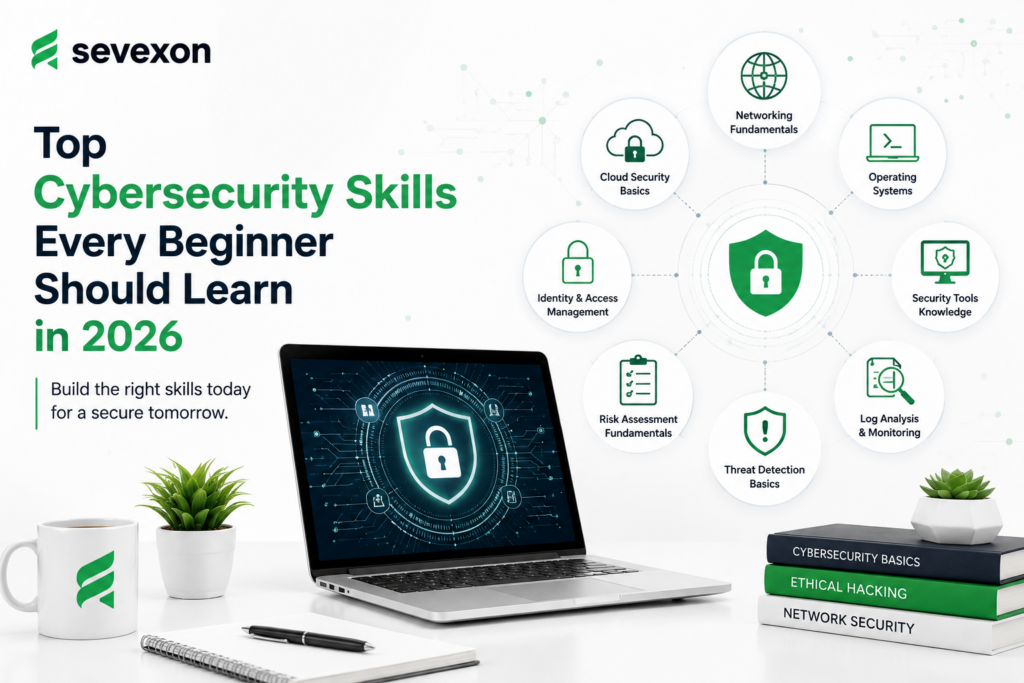
Networking and Operating Systems
Strong knowledge of networking and operating systems forms the backbone of cybersecurity learning. Beginners should understand:
- TCP/IP
- DNS
- HTTP/HTTPS
- Firewalls
- VPNs
- Windows systems
- Linux fundamentals
- Command-line basics
These concepts help learners understand how systems communicate and how attacks occur within networks and endpoints.
Defensive Security Skills
Defensive security focuses on protecting systems, detecting threats, and responding to security incidents. Important defensive security skills include:
- SIEM monitoring
- Log analysis
- Incident response
- Threat detection
- Endpoint security
- Threat intelligence
- Security monitoring
Understanding tools such as Splunk, Microsoft Sentinel, QRadar, and Elastic SIEM helps learners gain exposure to real SOC operations.
Offensive Security Skills
Offensive security involves identifying vulnerabilities and understanding attacker techniques. Beginners should learn:
- Vulnerability assessment basics
- Web application security
- Penetration testing fundamentals
- Reconnaissance techniques
- Security testing methodologies
- Common attack techniques
Learning offensive security concepts helps professionals understand how attackers operate and how organizations can strengthen their defenses.
Cloud and Security Technologies
Modern organizations use cloud platforms and advanced technologies extensively. Beginners should gain awareness of:
- Cloud security basics
- Identity and access management
- Multi-factor authentication
- Security configurations
- Endpoint protection
- Network security controls
Understanding modern security technologies helps learners adapt to evolving industry requirements.
Governance, Risk, and Compliance (GRC)
Cybersecurity is not limited to technical security alone. Organizations also require professionals who understand compliance and security governance concepts such as:
- Risk management
- Security policies
- Compliance frameworks
- Data protection
- Security awareness
- Audit fundamentals
Knowledge of governance and compliance helps organizations maintain secure and regulated environments.
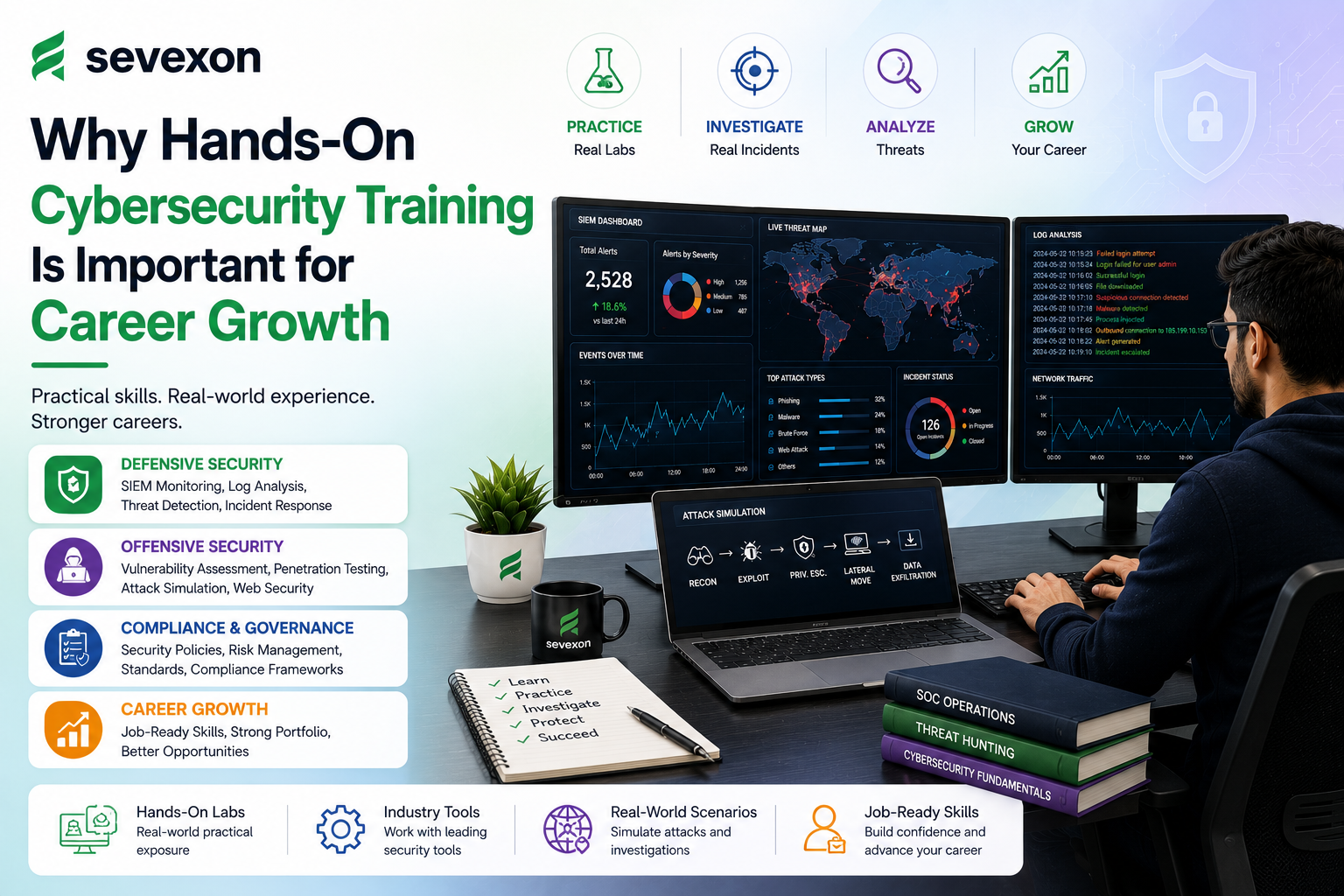
Importance of Hands-On Training
Practical learning is one of the most important parts of cybersecurity education. Hands-on labs help learners:
- Work with real security tools
- Investigate security incidents
- Understand attack techniques
- Analyze logs and alerts
- Improve analytical thinking
- Build real-world cybersecurity skills
Practical exposure significantly improves technical confidence and career readiness.
Career Opportunities in Cybersecurity
Cybersecurity offers multiple career paths including:
- SOC Analyst
- Penetration Tester
- Threat Intelligence Analyst
- Security Engineer
- Cloud Security Analyst
- GRC Analyst
- Incident Responder
- Vulnerability Management Analyst
Continuous learning and practical experience help professionals grow successfully in the cybersecurity industry.
Conclusion
Building strong cybersecurity fundamentals is the first step toward becoming a successful cybersecurity professional. By learning offensive security, defensive security, compliance concepts, and hands-on practical skills, beginners can prepare themselves for real-world cybersecurity careers and long-term growth opportunities.
At Sevexon, we focus on practical cybersecurity learning through hands-on labs, real-world scenarios, and industry-focused guidance to help learners become job-ready professionals.